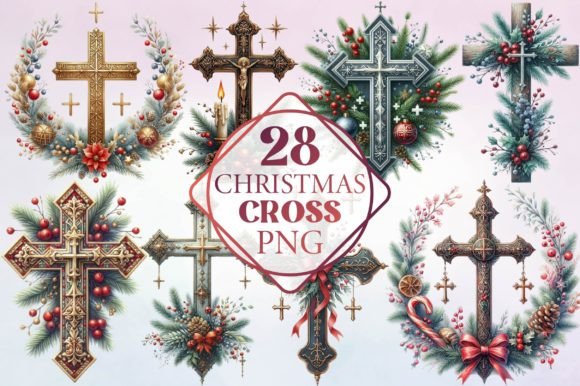
Watercolor Christmas Cross Clipart Review
As a designer who spends half my life staring at stitch charts and the other half trying to convince clients that embroidery isn’t just for old-fashioned handkerchiefs, I have developed a pretty sharp eye for what works on fabric versus what looks great on a screen. When I first pulled up Watercolor Christmas Cross Clipart, my initial reaction was one of cautious optimism. We are living in an era where digital assets flood our inboxes daily, and many of them scream "cheap clipart" the moment you try to convert them into a machine-readable format. However, this particular piece from the Illustrations category caught my attention not because it was flashy, but because it possessed a softness that translates surprisingly well to thread.
The First Impression: Mood and Visual Personality
Before I even thought about hoop sizes or stabilizer types, I had to ask myself: does this design evoke the right feeling? The term "watercolor" in digital art usually implies bleeding edges, soft gradients, and a lack of hard definition. In the context of a Christmas cross, this is a risky move. Hard lines usually read better in embroidery because they provide structure. But here is the thing about Watercolor Christmas Cross Clipart: it doesn’t rely on rigid geometry. It feels organic, gentle, and inviting. It creates a mood that is less "bold holiday statement" and more "quiet morning with cocoa." This visual personality makes it perfect for projects where subtlety is key. It suggests a handmade product that feels curated rather than mass-produced, which is exactly what today’s consumers are looking for when they browse Etsy or visit local craft fairs.
Real-World Application: From Screen to Stitch
Let’s talk about how this design behaves in a real-life scenario. Imagine you are preparing a custom embroidered tote bag for a boutique client who wants something festive but not overwhelming. You pull up Watercolor Christmas Cross Clipart. Because of its softer aesthetic, it pairs beautifully with natural fabrics like canvas, linen, or heavy cotton. If you were to embroider this onto a sweatshirt, the watercolor effect would mimic the texture of knitwear, creating a cohesive look. For baby clothes, the softness is non-negotiable; harsh lines can feel too aggressive for nursery decor or infant bodysuits. This design bridges that gap perfectly.
I also envision this working exceptionally well as an embroidered patch for denim jackets or caps. The cross shape provides a strong central anchor, while the watercolor style adds a touch of artistic flair that distinguishes it from standard geometric crosses. For kitchen towels or tea towels, which are staple items in any craft business, this design adds a layer of elegance. It transforms a simple utility item into a decorative piece. When you consider holiday embroidery trends, there is a massive shift toward muted tones, pastels, and rustic aesthetics. This clipart fits squarely into that trend, making it a smart choice for seasonal collections.
Performance on Different Garments and Accessories
- Tote Bag Design: The design scales well on large canvas surfaces. It allows for generous use of fill stitch to create that watercolor depth without becoming too dense.
- Sweatshirt Embroidery: On fleece or cotton blends, the soft edges blend seamlessly with the fabric nap, reducing the risk of the design looking pasted on.
- Baby Embroidery: Ideal for onesies and blankets where comfort and visual gentleness are priorities. The design avoids sharp corners that might look harsh.
- Custom Apparel: Works well on light-colored shirts where the thread colors can pop against the background, maintaining the illusion of painted washes.
Where Caution Is Required
No design is perfect, and as a reviewer, I need to be honest about where Watercolor Christmas Cross Clipart might struggle. The primary challenge with watercolor-style designs is detail retention. If you attempt to digitize this for a very small hoop size, such as under 2 inches, you will lose the subtle variations that give it character. The "bleeding" effect of the watercolor may turn into muddy blobs if the stitches are too close together or if the resolution of the source file is low.
Furthermore, textured fabrics pose a significant risk. If you are working with bouclé yarns, heavy tweeds, or highly napped materials, the fine details of the cross may get lost in the weave. Thin or stretchy fabrics require careful stabilization; otherwise, the stitch density needed to create the watercolor effect could cause puckering. Dark fabrics are another consideration. While dark threads can work, the contrast required to maintain the watercolor illusion might demand a higher thread count, which increases stitching time and wear on your machine. I also advise against using this design for products that need frequent washing, such as work aprons, unless you are confident in the stability of the satin stitches holding the outer edges.
Impact on Product Value and Branding
Using a design like Watercolor Christmas Cross Clipart elevates the perceived value of your finished product. Customers associate intricate, soft-looking embroidery with higher quality and more effort. It signals to the buyer that this is a handmade product created with care, not a cheap print. For Etsy sellers and small shop owners, this distinction is crucial. It helps justify a premium price point. Moreover, it enhances brand consistency. If your brand voice is cozy, artistic, and traditional, this design reinforces that identity. It builds customer trust by showing attention to aesthetic detail.
In terms of commercial embroidery, this design offers versatility. It can be used for wedding gifts, particularly for bridesmaids or groomsmen who appreciate understated elegance. It fits naturally into personalized gifts where names or dates are added nearby, balancing the text with the graphic element. For digital product sellers, offering this as part of a bundle with complementary watercolor elements can increase the average order value.
Practical Designer Notes for Execution
If you decide to incorporate Watercolor Christmas Cross Clipart into your workflow, follow these practical steps to ensure success:
- Test on Scrap Fabric: Never commit to a final piece without testing the digitization on a scrap of the actual fabric you plan to use. Check how the thread colors interact with the material.
- Check Stitch Density: Ensure the machine embroidery design does not have excessive underlay or fill stitches that could make the fabric stiff. A watercolor effect should feel light and airy.
- Review Small Details: Zoom in on the digitized file. Are the tiny bits of color distinct, or will they merge? Adjust the stitch length if necessary to preserve the artistic intent.
- Use Proper Stabilizer: Depending on the fabric, you may need cut-away stabilizer for permanent support or tear-away for temporary backing. Incorrect stabilization is the #1 cause of failed embroidery projects.
- Black and White Mockups: View the design in grayscale to check contrast. If it lacks definition in black and white, it will likely look flat in color.
- Confirm Licensing: Before selling any finished product or digital embroidery file, verify the commercial use rights of the original asset. Do not assume that buying a clipart means you own the rights to sell embroidered goods made from it.
Ultimately, Watercolor Christmas Cross Clipart is a thoughtful addition to any designer’s library. It requires a bit more skill to execute perfectly than a bold, high-contrast graphic, but the reward is a sophisticated, timeless piece that resonates with buyers seeking authenticity. By understanding its strengths and limitations, you can transform a simple digital illustration into a stunning embroidery project that stands out in a crowded market.