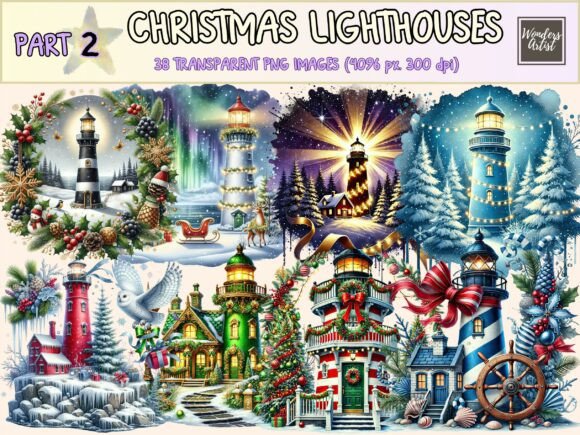
Christmas Lighthouses Clipart P1 Illustrations Review
In the world of digital publishing, visual assets are not merely decorative; they are functional tools that dictate user engagement, brand trust, and content hierarchy. As a blog designer who has spent years optimizing editorial layouts for high-traffic websites, I approach every new graphic design asset with a critical eye. Does it elevate the content? Does it support the narrative? Or does it simply add noise to an already cluttered screen?
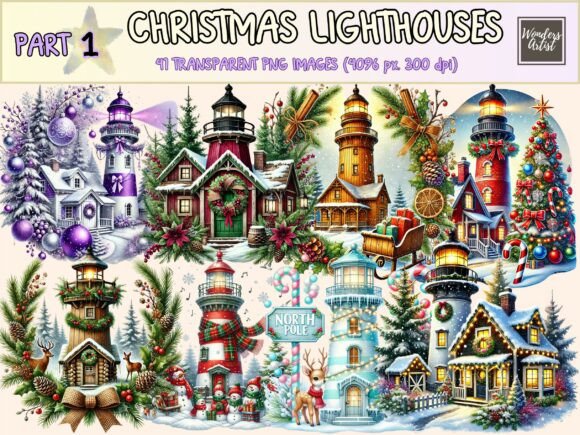
This week, I evaluated a seasonal collection titled Christmas Lighthouses Clipart P1. At first glance, it appears to be a standard holiday illustration set. However, upon closer inspection within a real-world publishing workflow, this asset reveals itself as a versatile tool for bloggers, affiliate marketers, and small business owners looking to inject warmth and structure into their winter content strategies. Below is my detailed review of how these Illustrations perform in live editorial environments.
The Editorial Mood and First Impression
When you first load a design asset into your workspace, the immediate impression sets the tone for the entire project. The Christmas Lighthouse theme naturally evokes feelings of guidance, safety, and coastal charm. In an editorial context, this translates to a mood that is both nostalgic and calming. Unlike generic snowflakes or reindeer clipart, which can sometimes feel juvenile or overly commercial, lighthouses offer a sense of stability and tradition.
For content creators in niches such as lifestyle blogging, home decor, travel, or even mental wellness, this visual language supports a "slow living" aesthetic. It feels modern yet timeless, clean yet artistic. When used correctly, these graphics signal to the reader that the content behind them is polished, thoughtful, and curated. This is crucial for building reader trust, especially when promoting affiliate products or selling digital guides during the competitive Q4 season.
Real-World Publishing Applications
The true value of any design asset lies in its versatility across different media formats. Here is how I integrated Christmas Lighthouses Clipart P1 into various stages of a typical content marketing workflow:
- Blog Featured Images and Headers: These illustrations work exceptionally well as overlays on hero images. Their distinct shapes create strong focal points that draw the eye toward the headline text without competing with it. For a post about "Winter Home Essentials," placing a lighthouse graphic in the corner adds thematic relevance instantly.
- Pinterest Pins and Social Media Graphics: Pinterest is a visual search engine where click-through rates depend heavily on clear visual hierarchy. The vertical composition of many lighthouse designs fits perfectly with standard pin dimensions. They stand out against white or pastel backgrounds, offering higher visibility than dense, text-heavy pins.
- Digital Guides and Lead Magnets: If you are creating a downloadable PDF, such as a "Holiday Hosting Checklist" or a "Cozy Winter Reading List," these Illustrations can serve as section dividers or cover art. They lend a professional touch to free resources, making them feel more valuable and encouraging email sign-ups.
- Newsletter Banners: Email open rates are improving when the header image aligns with the subject line’s emotional tone. A lighthouse graphic paired with a headline like "Navigating Your Holiday Gift Guide" creates a cohesive visual story before the subscriber even opens the email.
- E-Commerce and Affiliate Content: For small business owners selling physical goods, these graphics can enhance product photos or category pages. They help break up long blocks of text and provide visual relief, keeping the user engaged longer on the page.
Impact on Content Performance and Brand Identity
Consistency is key to building a recognizable brand identity. By using a specific style of clipart across all platforms—from your website to your social media profiles—you create a unified visual language. Christmas Lighthouses Clipart P1 supports this by offering a consistent artistic style that can be repeated across multiple posts throughout December.
Furthermore, good visual hierarchy improves readability. When text is placed strategically near negative space in these illustrations, the content becomes easier to scan. This is particularly important for mobile users, who make up the majority of web traffic. A well-designed graphic reduces cognitive load, allowing readers to process information faster. This directly contributes to better time-on-page metrics and lower bounce rates, which are favorable signals for SEO.
Additionally, using high-quality creative design elements signals professionalism. Readers subconsciously associate the quality of your visuals with the quality of your advice or products. Polished graphics suggest that you care about details, which enhances credibility in competitive affiliate marketing niches.
Optimal Placement Strategies
To maximize the effectiveness of these assets, consider where they fit best within your layout:
- Hero Images: Use large-scale versions to establish the seasonal theme immediately.
- Article Thumbnails: Smaller icons can serve as bullet points or category markers.
- Editorial Accents: Place subtle watermarks or corner decorations to frame text blocks.
- Category Visuals: Create unique headers for sections like "Gift Ideas" or "Decor Tips."
Areas Requiring Caution
While powerful, no single asset is suitable for every scenario. There are specific contexts where Christmas Lighthouses Clipart P1 may not perform optimally:
- Small Mobile Thumbnails: Intricate details may become muddy when scaled down to 150x150 pixels. Test legibility carefully before finalizing thumbnails.
- Text-Heavy Blog Images: Avoid overlaying dense paragraphs of text directly onto complex parts of the illustration. Ensure there is sufficient contrast and breathing room.
- Low-Contrast Backgrounds: If your website uses dark mode or busy photographic backgrounds, light-colored lighthouse graphics might disappear. Always check visibility in various lighting conditions.
- Serious Professional Niches: For corporate finance or legal blogs, this playful yet elegant style may feel too informal. Reserve it for lifestyle, education, or creative sectors.
Practical Publisher Notes for Implementation
Before integrating these digital downloads into your monetized websites, follow these technical best practices:
Test Across Devices: Preview your blog layout on desktop, tablet, and mobile screens. Ensure the graphics do not distort or overlap navigation elements.
Check Typography Pairings: Experiment with how the graphics interact with different font styles. A lighthouse illustration pairs beautifully with serif fonts for a classic look, sans-serif fonts for a modern feel, or script fonts for a personal, handwritten touch. Avoid pairing with overly decorative display fonts that compete for attention.
Verify Licensing: Confirm the commercial license terms. Ensure you are permitted to use the images on affiliate pages, paid content products, and ad campaigns. Proper licensing protects your business from legal issues.
Optimize File Size: Large image files slow down page load times, hurting SEO. Compress your PNG or JPEG files using tools like TinyPNG before uploading. Aim for a balance between sharpness and speed.
Review in Black and White: Convert your design to grayscale to check contrast levels. If the graphic loses its shape or impact, it may need stronger outlines or color adjustments.
In conclusion, Christmas Lighthouses Clipart P1 is a robust content marketing tool that bridges the gap between festive cheer and editorial professionalism. By applying it strategically to web design projects, newsletters, and social media campaigns, publishers can significantly enhance their visual storytelling and drive better engagement results.